Updated November 11, 2025 · Clear guidance for homeowners, property managers, and local businesses
Diagnose the source before choosing the repair.
What this guide covers
Understand the likely causes, what affects repair cost, and when it is safer to call a licensed plumbing professional.
Troubleshooting guide · about 10 minutes
A safer way to work through the first checks.
Use sound, timing, and visible symptoms to decide whether a water-heater noise is normal operation or a reason to schedule an inspection.
DifficultyVisual and listening check
PreparePhone camera, notes, flashlight, and the equipment manual.
Stop and callLeaks, sewage, gas, electrical risk, or anything you cannot safely reach.
Use the visual checks as a guide, then follow the manufacturer or site instructions.
Step-by-step walkthrough
Work through each step before moving to the next.
Take a photo or note what you find. If a step does not match your property or the symptom gets worse, stop and call for professional guidance.
Step 1
Describe the sound and when it happens
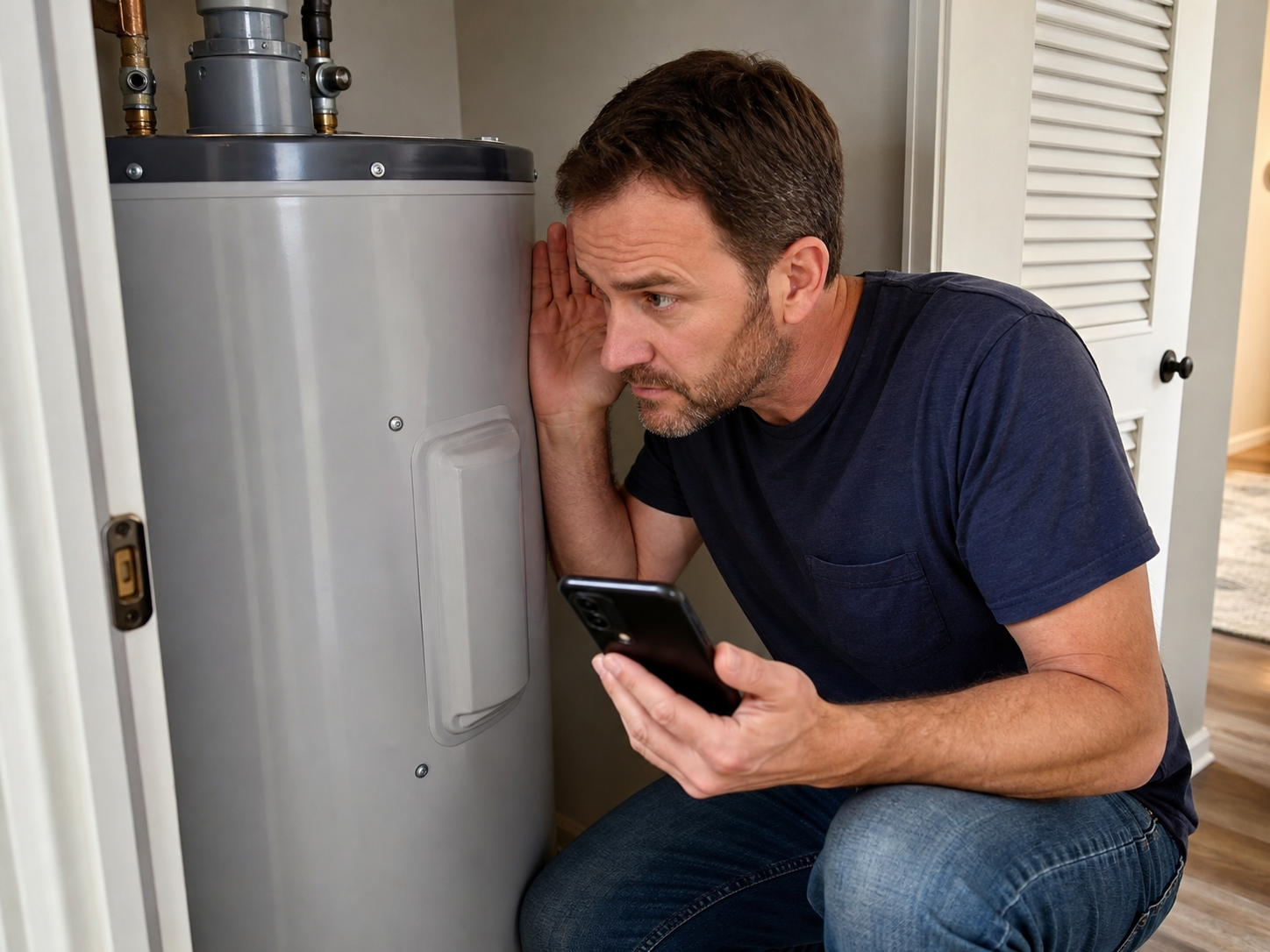
Note whether the sound is a brief click, hum, hiss, popping, rumbling, or continuous running sound. Record whether it starts after hot-water use or happens even when no fixture is open.
Check before continuing: Keep the area dry, controlled, and easy to observe.
Step 2
Check nearby fixtures for a hidden demand
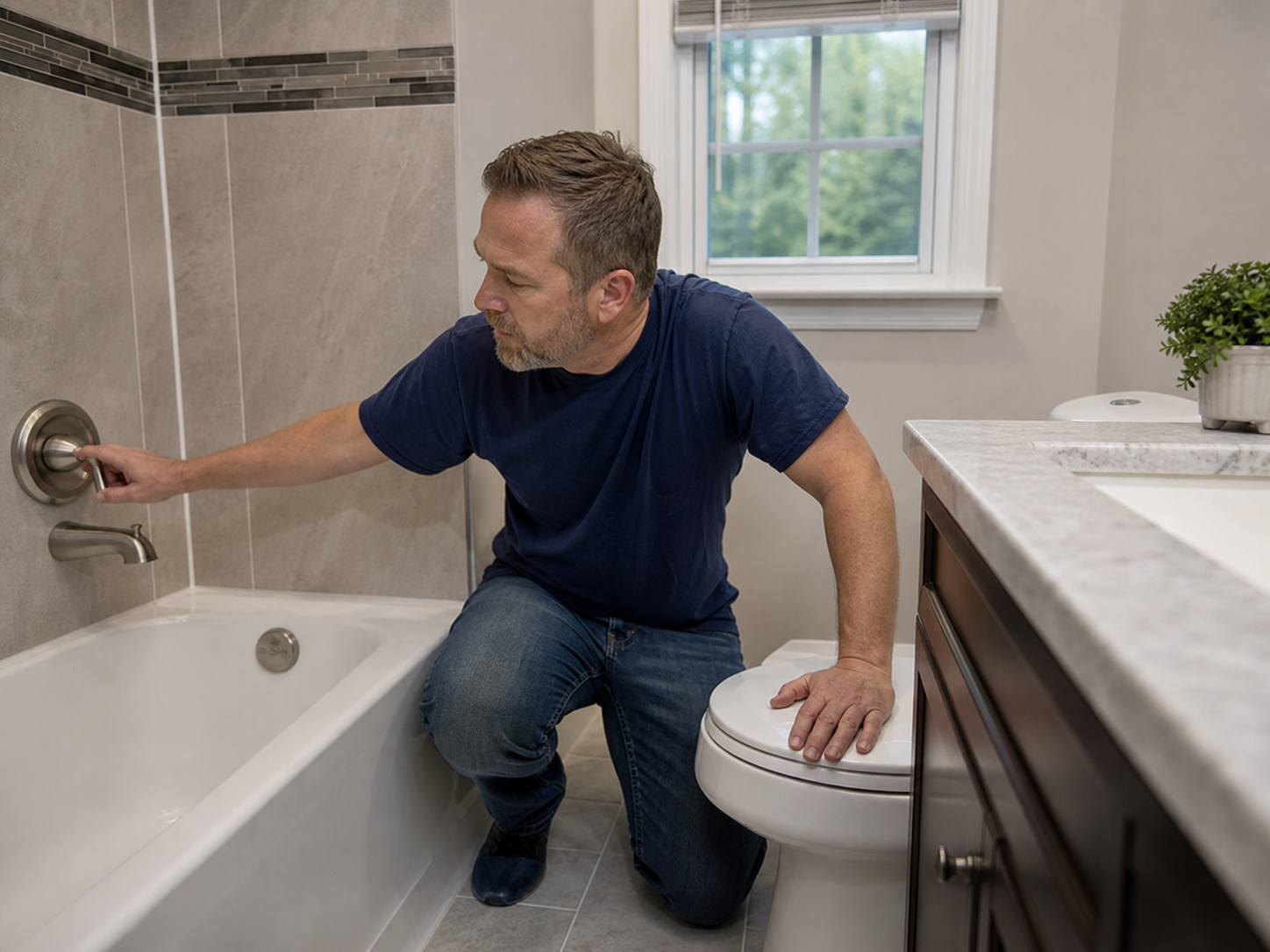
Listen for a running toilet, dripping faucet, water softener cycle, or hot-water fixture. Confirm that no one is using hot water before comparing the sound again.
Check before continuing: Keep the area dry, controlled, and easy to observe.
Step 3
Look for safe visual clues
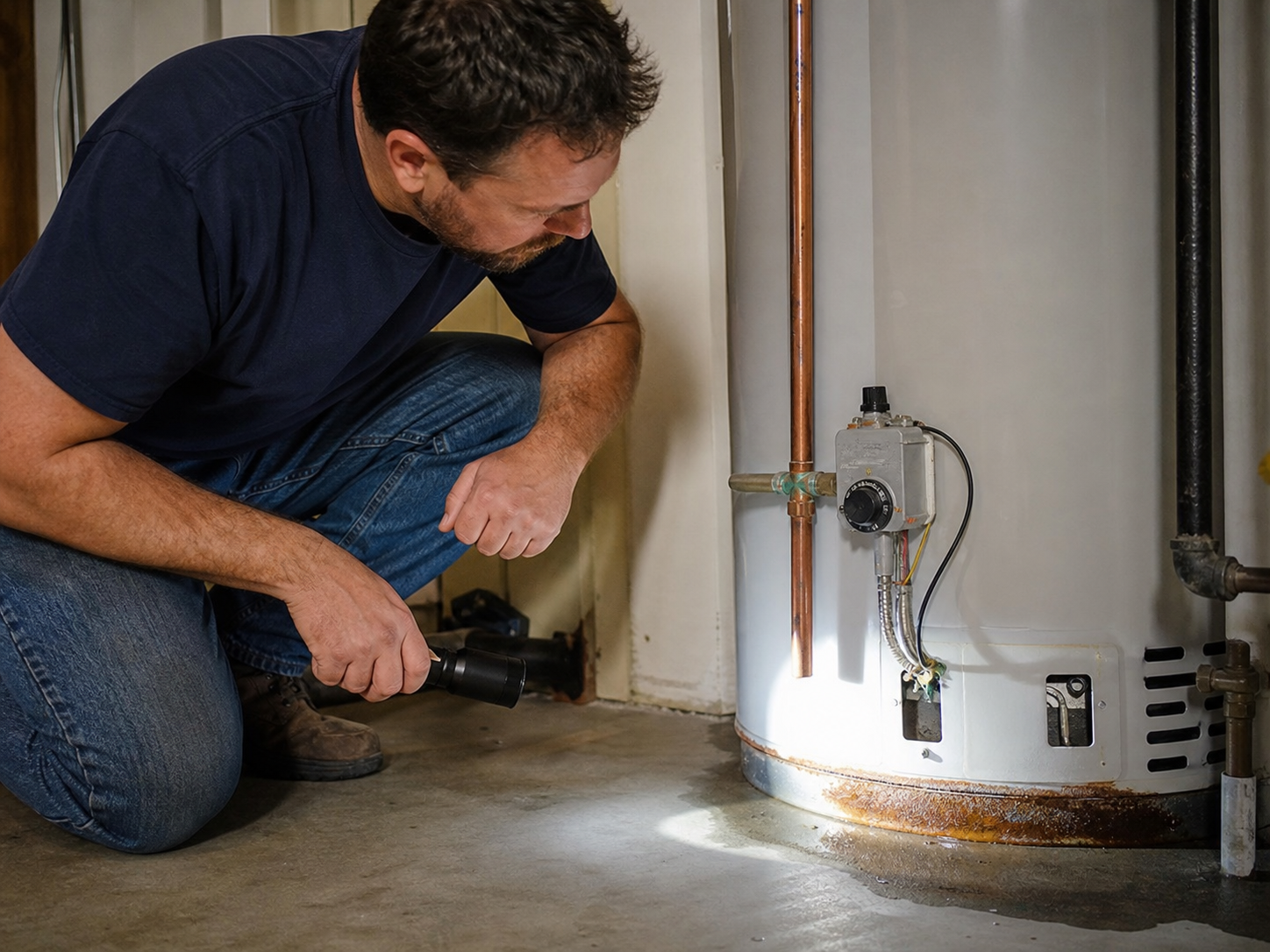
From outside the equipment panels, look for leaks, rust, soot, damaged insulation, or water around the base. Do not touch hot pipes or open the unit.
Check before continuing: Keep the area dry, controlled, and easy to observe.
Step 4
Schedule service with useful details
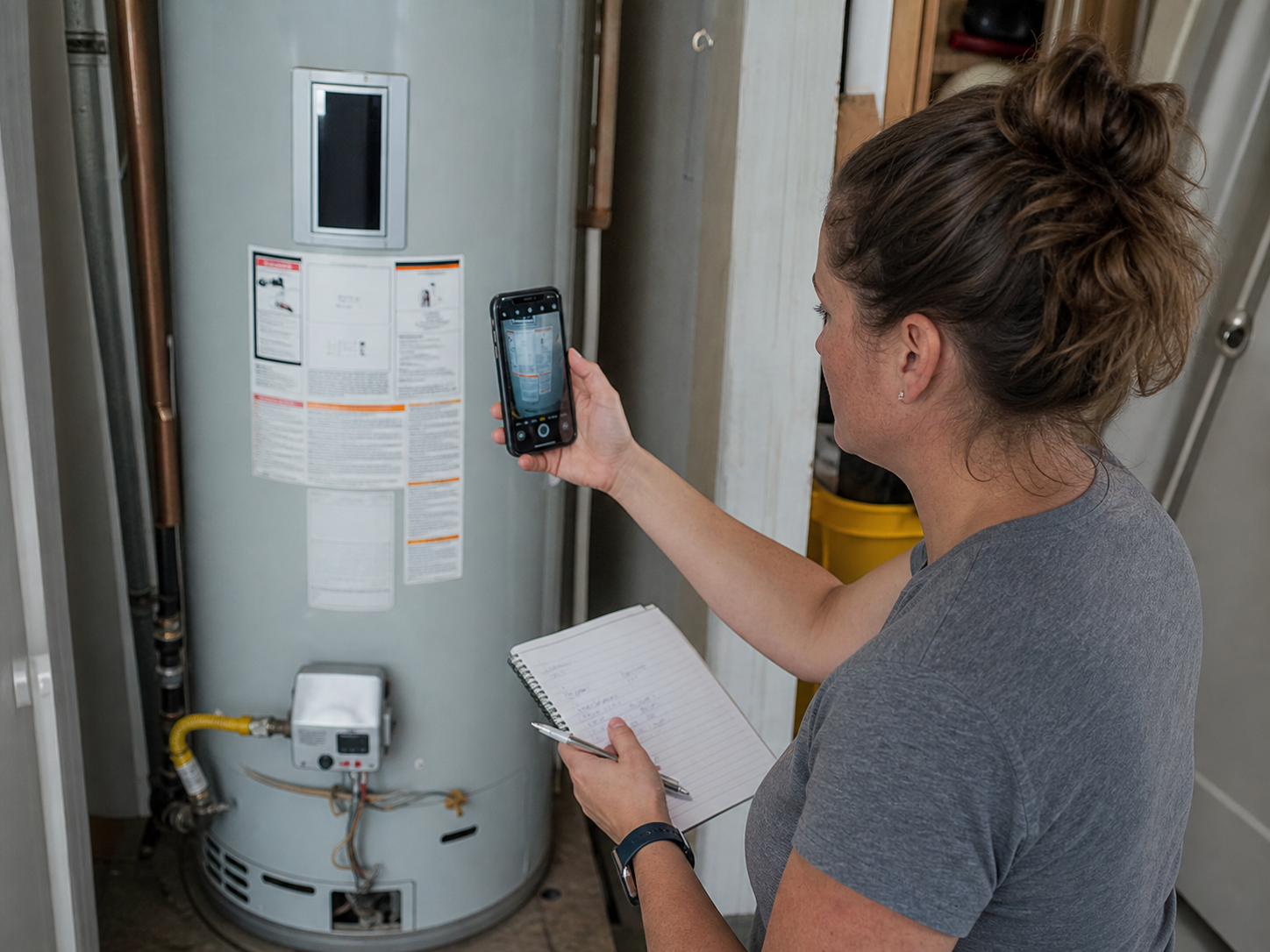
Share the sound recording, model and fuel type, leak or temperature symptoms, and whether the noise is new or worsening.
Check before continuing: Keep the area dry, controlled, and easy to observe.
Know your next step
When the simple check is not enough.
Share the photos, symptoms, and steps you already tried. New Flow Plumbing can help confirm the cause and recommend the appropriate repair path.
Your water heater most commonly sounds like it’s running due to a faulty Temperature and Pressure (T&P) valve dripping water, an undetected plumbing leak in the tank or pipes, or internal noise from boiling water trapped beneath sediment.
Are you puzzled by the sound of running or dripping water near your hot water heater, even when every tap and appliance in your home is shut off? That persistent, mysterious noise is your water heater sending a signal. Ignoring it can lead to high utility bills, water waste, and even significant home damage.
This expert guide helps homeowners quickly diagnose the source of the “running water” sound – from minor, fixable issues to major hidden leaks. Learn the critical steps to take to find a local plumbing solution immediately, restoring quiet, reliable hot water to your home.
Causes of Running Water Sounds: Identifying Water Waste
The sound of water moving near an idle heater almost always means water is escaping the system. Here are the most common causes requiring a plumber’s attention.
1. Faulty Temperature and Pressure Relief (T&P) Valve
The T&P valve is a critical safety device designed to open and release small amounts of water or steam if the pressure or temperature inside the tank gets too high.
The Issue: The valve can become clogged with mineral deposits (sediment) or wear out, failing to create a tight seal after its operation. This results in a continuous, slow trickle of water down the overflow pipe, creating the “running” sound.
The Solution: A dripping T&P valve compromises the safety of your unit and wastes water. It must be inspected and likely replaced by a certified local plumber. This is a quick and essential repair.
2. Leaks in Plumbing or Water Heater Fittings
Visible leaks, even small ones, can create a trickling sound as water drains away or evaporates.
Inspection Points: Check the pipe connections at the top (inlet and outlet), the drain valve at the bottom, and the tank’s body. Moisture, rust streaks, or a small puddle near the base are clear indicators of a leak.
Leak Severity: A leak from a loose fitting can often be quickly repaired. However, a leak from the tank itself usually means the internal lining is corroded, signaling the need for a full water heater replacement to prevent catastrophic failure.
Internal Noises Mistaken for Running Water (Sediment and Circulation)
Sometimes, the noise is not flowing water, but internal sounds caused by operational features or buildup that sound similar.
3. Popping and Rumbling from Sediment Buildup
Homes with hard water naturally accumulate mineral deposits (sediment) at the bottom of the tank over time.
Why It Sounds Like Running: When the heating element or burner activates, water trapped underneath the layer of sediment boils. The resulting steam forces its way up, causing loud popping, crackling, and rumbling sounds that can be easily mistaken for running water.
The Benefit of Maintenance: Sediment drastically reduces efficiency and tank lifespan. Schedule an annual water heater flush and drain service. This simple maintenance removes the noise, improves heating performance, and extends your water heater’s life.
4. Normal Operation of a Hot Water Recirculation Pump
If your home has a system that provides instant hot water at the tap, you may be hearing its normal operation.
Recirculation System Noise: A recirculation pump runs periodically (often on a timer or thermostat) to maintain warm water in the pipes. The light hum or rushing water sound is simply the pump doing its job.
When to Call a Pro: If the sound is suddenly louder or runs constantly, the pump may be failing or needs its settings checked.
The Hidden Danger: Slab Leaks and High Water Bills
If you have inspected the heater and surrounding pipes and found no visible leak, the “running water” sound could indicate a slab leak – a failure in the plumbing pipes located under your home’s concrete foundation.
Indicates an active, non-stop leak in the main line.
Immediate shut-off of the main water supply is needed.
Noticeable Warm Spots on the Floor
Hot water is leaking directly beneath the concrete.
This can damage your foundation and requires professional leak detection.
Unexplained Spike in Monthly Water Bills
This can damage your foundation and requires professional leak detection.
Signals the leak has been active and growing over time.[/fusion_table]
Catching a slab leak early saves your foundation and thousands of dollars in water costs. This issue requires professional slab leak detection and repair services using specialized, non-invasive acoustic tools.
Conclusion: Get Your Water Heater Inspected Today
Hearing running water when you know all your fixtures are off is never a sound to ignore. While the cause might be a simple T&P valve replacement or routine sediment flushing, it could also be a warning sign of a costly leak or a necessary water heater replacement.
Don’t wait for a slow drip to become a damaging flood. By calling a trusted local plumber to diagnose the strange noises, you not only eliminate the sound but also save money on water bills, protect your home from water damage, and ensure your system is running safely and efficiently.
Ready to stop the noise and ensure your home’s plumbing is secure?
[/fusion_title][fusion_accordion type=”” inactive_icon=”” active_icon=”” margin_top=”” margin_bottom=”” hide_on_mobile=”small-visibility,medium-visibility,large-visibility” class=”” id=”” boxed_mode=”” border_size=”1″ border_color=”” hue=”” saturation=”” lightness=”” alpha=”” hover_color=”” background_color=”” divider_line=”” divider_hover_color=”” divider_color=”” padding_top=”” padding_right=”” padding_bottom=”” padding_left=”” title_tag=”h4″ fusion_font_family_title_font=”” fusion_font_variant_title_font=”” title_font_size=”” title_line_height=”” title_letter_spacing=”” title_text_transform=”” title_color=”#007fad” icon_size=”” icon_color=”” icon_boxed_mode=”” icon_box_color=”” icon_alignment=”” fusion_font_family_content_font=”” fusion_font_variant_content_font=”” content_font_size=”” content_line_height=”” content_letter_spacing=”” content_text_transform=”” content_color=”#191b1c” toggle_hover_accent_color=”” toggle_active_accent_color=”” parent_dynamic_content=””][fusion_toggle title=”Why does my water heater make a running water sound when no water is running?” open=”no” awb-switch-editor-focus=”” class=”” id=”” fusion_font_family_title_font=”” fusion_font_variant_title_font=”” title_font_size=”” title_line_height=”” title_letter_spacing=”” title_text_transform=”” title_color=”#007fad” hue=”” saturation=”” lightness=”” alpha=”” fusion_font_family_content_font=”” fusion_font_variant_content_font=”” content_font_size=”” content_line_height=”” content_letter_spacing=”” content_text_transform=”” content_color=”#191b1c”]
This sound usually means water is leaking somewhere. The most common place is the Temperature and Pressure Relief (T&P) valve, which lets out small amounts of water if pressure gets too high. You hear this water trickling away through the drainpipe. This safety valve must be replaced if it’s constantly dripping. New Flow Plumbing can quickly inspect and replace your faulty T&P valve, ensuring your safety system works correctly and stopping water waste, which helps lower your water bill.
Sometimes, especially with newer or high-efficiency gas models, a slight dripping sound is just condensation forming on the cold tank surface and dripping off. This is more common in humid areas or cold rooms. However, if the sound is loud or constant, it is likely a leak. We recommend a quick check to rule out leaks, as condensation noises are usually very soft, random, and stop quickly as the unit warms up.
This sound means you have sediment (hard mineral deposits like calcium) built up inside the bottom of the tank. When the heater turns on, water gets trapped underneath the thick layer of sediment and boils. The steam then forces its way up, causing loud popping and rumbling sounds. A professional flush is necessary. We at New Flow Plumbing specialize in thorough water heater flushes, using specialized tools to remove sediment and debris, restoring efficiency and silencing the noise.
[/fusion_toggle][fusion_toggle title=”Why is my hot water noisy right after I turn on a tap?” open=”no” awb-switch-editor-focus=”” class=”” id=”” fusion_font_family_title_font=”” fusion_font_variant_title_font=”” title_font_size=”” title_line_height=”” title_letter_spacing=”” title_text_transform=”” title_color=”#007fad” hue=”” saturation=”” lightness=”” alpha=”” fusion_font_family_content_font=”” fusion_font_variant_content_font=”” content_font_size=”” content_line_height=”” content_letter_spacing=”” content_text_transform=”” content_color=”#191b1c”]
This noise is often caused by restricted water flow. A valve leading to the heater might be partially closed, or there could be mineral scale or debris blocking a pipe near the inlet. This restricted flow can cause a high-pitched whistling or screeching sound. A qualified technician can inspect all your supply valves to ensure they are fully open and check for obstructions, restoring smooth water flow and quiet operation.
[/fusion_toggle][fusion_toggle title=”Can the water heater sound like it’s running because of a leak under my house?” open=”no” awb-switch-editor-focus=”” class=”” id=”” fusion_font_family_title_font=”” fusion_font_variant_title_font=”” title_font_size=”” title_line_height=”” title_letter_spacing=”” title_text_transform=”” title_color=”#007fad” hue=”” saturation=”” lightness=”” alpha=”” fusion_font_family_content_font=”” fusion_font_variant_content_font=”” content_font_size=”” content_line_height=”” content_letter_spacing=”” content_text_transform=”” content_color=”#191b1c”]
Yes, absolutely. If your home uses pipes buried under a concrete slab foundation, a leak there (called a slab leak) can sound exactly like running water. Clues include unexplained hot spots on the floor or a spiking water bill. New Flow Plumbing provides advanced slab leak detection using acoustic tools and thermal imaging to find the hidden leak’s precise location without unnecessary foundation damage.
[/fusion_toggle][fusion_toggle title=”How long can I safely ignore the running water sound?” open=”no” awb-switch-editor-focus=”” class=”” id=”” fusion_font_family_title_font=”” fusion_font_variant_title_font=”” title_font_size=”” title_line_height=”” title_letter_spacing=”” title_text_transform=”” title_color=”#007fad” hue=”” saturation=”” lightness=”” alpha=”” fusion_font_family_content_font=”” fusion_font_variant_content_font=”” content_font_size=”” content_line_height=”” content_letter_spacing=”” content_text_transform=”” content_color=”#191b1c”]
You should never ignore it. If the sound is caused by a leak, you are wasting hundreds of gallons of water and risking costly damage to your home and foundation. Even sediment causes your heater to work harder, reducing its lifespan. Call for service as soon as you notice a persistent strange noise to prevent a small problem from becoming a flood or an expensive energy bill.
[/fusion_toggle][fusion_toggle title=”Do all water heaters need to be flushed out regularly?” open=”no” awb-switch-editor-focus=”” class=”” id=”” fusion_font_family_title_font=”” fusion_font_variant_title_font=”” title_font_size=”” title_line_height=”” title_letter_spacing=”” title_text_transform=”” title_color=”#007fad” hue=”” saturation=”” lightness=”” alpha=”” fusion_font_family_content_font=”” fusion_font_variant_content_font=”” content_font_size=”” content_line_height=”” content_letter_spacing=”” content_text_transform=”” content_color=”#191b1c”]
Yes, most standard tank water heaters benefit greatly from annual flushing. This process removes the mineral buildup that causes those loud popping and rumbling sounds and makes the unit less efficient. New Flow Plumbing offers maintenance plans that include annual flushing to keep your unit running quietly and efficiently, saving you money on gas or electricity bills and extending the life of your appliance.
[/fusion_toggle][fusion_toggle title=”What if the tank itself is leaking-can that be fixed?” open=”no” awb-switch-editor-focus=”” class=”” id=”” fusion_font_family_title_font=”” fusion_font_variant_title_font=”” title_font_size=”” title_line_height=”” title_letter_spacing=”” title_text_transform=”” title_color=”#007fad” hue=”” saturation=”” lightness=”” alpha=”” fusion_font_family_content_font=”” fusion_font_variant_content_font=”” content_font_size=”” content_line_height=”” content_letter_spacing=”” content_text_transform=”” content_color=”#191b1c”]
Unfortunately, if water is visibly leaking from the tank body itself, it means the interior steel lining has corroded and fractured. This problem is internal and cannot be patched safely or effectively. You will need a full water heater replacement. A reputable plumbing company provides expert replacement services, including guidance on choosing the right new unit (like high-efficiency or tankless models) for your home size and budget.
[/fusion_toggle][fusion_toggle title=”Does a recirculation pump always make a running water sound?” open=”no” awb-switch-editor-focus=”” class=”” id=”” fusion_font_family_title_font=”” fusion_font_variant_title_font=”” title_font_size=”” title_line_height=”” title_letter_spacing=”” title_text_transform=”” title_color=”#007fad” hue=”” saturation=”” lightness=”” alpha=”” fusion_font_family_content_font=”” fusion_font_variant_content_font=”” content_font_size=”” content_line_height=”” content_letter_spacing=”” content_text_transform=”” content_color=”#191b1c”]
If you have a recirculation pump (which gives you instant hot water), the sound of running water is often normal. The pump runs intermittently, based on a timer or thermostat, to keep the water warm in the distant parts of the pipe network. If the noise becomes much louder or runs non-stop, the pump may be failing or needs its settings adjusted. New Flow Plumbing can check your recirculation system settings and repair or replace the pump if it is malfunctioning.
[/fusion_toggle][fusion_toggle title=”How can I tell if the leak is from the water heater or another appliance?” open=”no” awb-switch-editor-focus=”” class=”” id=”” fusion_font_family_title_font=”” fusion_font_variant_title_font=”” title_font_size=”” title_line_height=”” title_letter_spacing=”” title_text_transform=”” title_color=”#007fad” hue=”” saturation=”” lightness=”” alpha=”” fusion_font_family_content_font=”” fusion_font_variant_content_font=”” content_font_size=”” content_line_height=”” content_letter_spacing=”” content_text_transform=”” content_color=”#191b1c”]
The easiest way is to perform a water meter test. Turn off every single water source in your home (faucets, washers, sprinklers) and check your water meter. If the meter is still spinning rapidly, the leak is actively happening somewhere inside your home’s system. A professional plumber is ready to perform a full system inspection to pinpoint the exact location of the leak, whether it’s at the heater, under the floor, or coming from a pipe in the wall.